How to choose a language service provider
Choosing the wrong LSP can cost more than you think
Choosing a language service provider isn’t just a procurement decision. It’s a business decision that can directly impact your brand, your operations, and even your compliance.
A poor translation can do more than sound awkward. It can confuse customers, weaken your message, or create legal and reputational risks. On the other hand, the right partner helps you communicate clearly, enter new markets with confidence, and build a consistent global presence.
But with so many agencies promising speed, quality, and AI-driven solutions, how do you actually tell them apart?
Here’s what to look for and how to make the right choice.
Start by understanding what you really need
Before comparing providers, take a step back. Not all translation needs are the same, and choosing the right partner starts with clarity on your side.
Are you looking for:
- Marketing content that needs to feel natural and persuasive?
- Technical or legal documentation that requires precision and compliance?
- Ongoing localisation for a website, app, or product?
- One-off certified translations?
Each of these requires different expertise, workflows, and tools.
Questions to ask internally:
- What type of content do we translate most often?
- How important is tone versus accuracy?
- Do we have regulatory or compliance requirements?
- Will this be a one-off project or an ongoing need?
A strong LSP won’t jump straight to pricing. They will take the time to understand your goals, your audience, and how language fits into your broader strategy.
At t’works, this discovery phase is where every successful project begins.
What to look for in a language service provider
Relevant experience, not just years in business
Experience isn’t just about how long a provider has existed. It’s about whether they’ve handled projects like yours.
Translating an automotive manual is very different from localising a marketing campaign. Each industry comes with its own terminology, tone, and constraints.
Look for:
- Proven experience in your industry
- Native linguists with subject-matter expertise
- Real examples or case studies.
The more familiar your provider is with your type of content, the smoother the process will be.
A clear and structured quality process
“High quality” is easy to claim, but what matters is how that quality is achieved.
A reliable LSP should have:
- A defined review and revision process
- Clear workflows and accountability
- Consistency mechanisms across projects.
Certifications such as ISO 17100 (translation services) or ISO 9001 (quality management) are a strong signal that the provider follows structured, traceable processes.
But quality isn’t just about processes. It’s also about people. The best LSPs invest in their linguists, ensuring they understand not only the language, but also the context, tone, and intent behind every message.
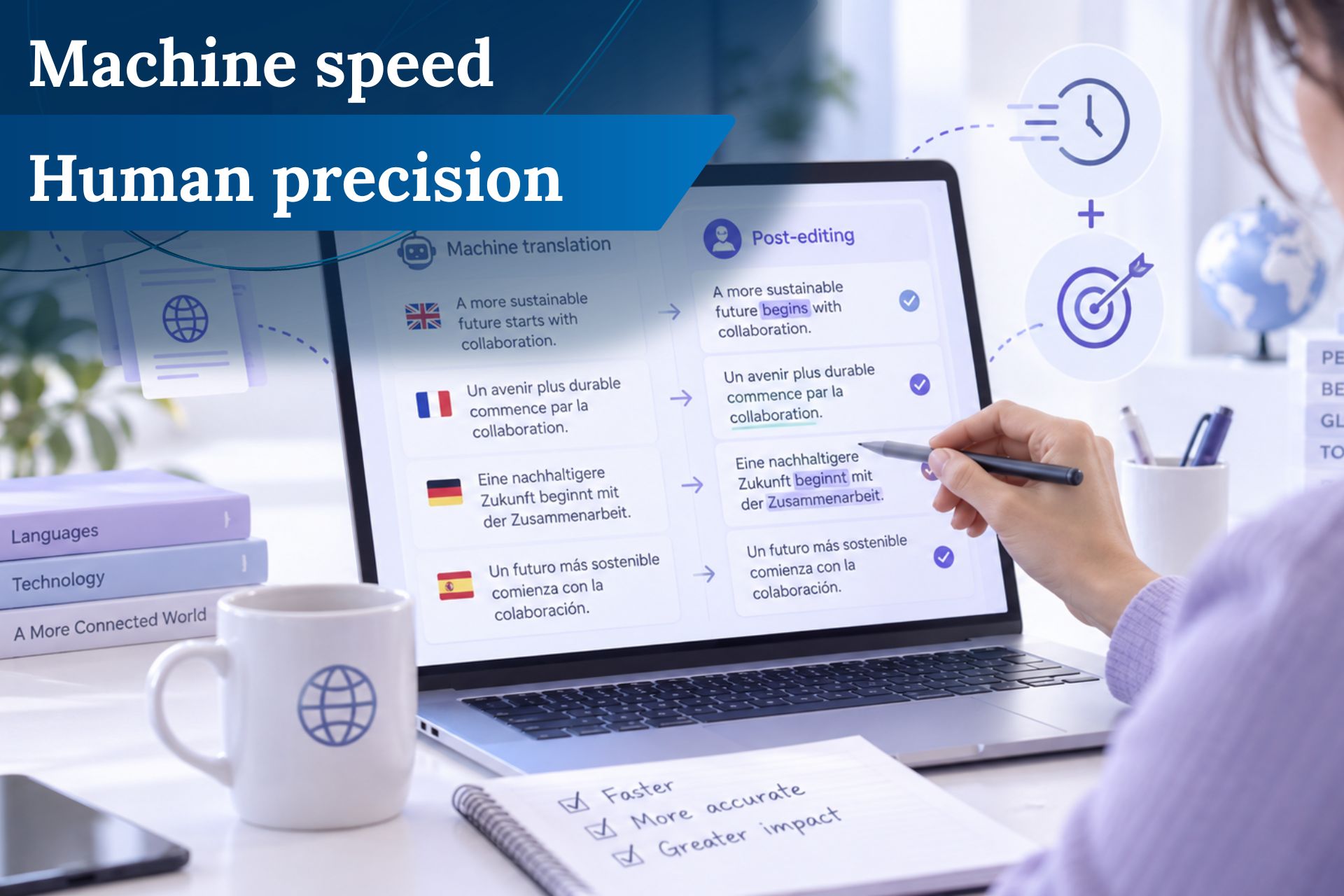
The right balance between technology and human expertise
Technology plays a key role in modern translation. Tools like translation management systems, terminology databases, and AI-assisted workflows can improve efficiency and consistency.
But technology should support humans, not replace them.
A good LSP will:
- Be transparent about when machine translation or AI is used
- Explain how human linguists review and refine the output
- Use technology to improve consistency, not compromise quality.
This balance is what allows faster turnaround times without losing nuance or accuracy.
Strong communication and project management
Translation is a collaborative process. And like any collaboration, communication matters.
Pay attention early on:
- How quickly do they respond?
- Are their answers clear and specific?
- Do they ask relevant questions about your project?
Poor communication at the beginning usually leads to bigger issues later.
At t’works, communication is treated as part of the service, not an afterthought. Clear points of contact, proactive updates, and transparent timelines make a measurable difference in how smoothly projects run.
Data security and confidentiality
Many translation projects involve sensitive information, from product launches to legal documents or internal communications.
Your provider should have:
- Secure file transfer systems
- Confidentiality agreements in place
- GDPR-compliant processes.
In a digital and global environment, data protection is not optional. It’s a basic requirement.
Scalability and long-term consistency
Your needs today may not be the same in six months or a year.
A small project can quickly evolve into:
- Website localisation
- Multilingual content production
- Ongoing updates across multiple markets.
A strong LSP should be able to scale with you while maintaining consistency.
This includes:
- Managing multiple languages and stakeholders
- Maintaining terminology across projects
- Ensuring your brand voice stays consistent everywhere.
Over time, a long-term partner becomes more efficient, because they already understand your preferences, tone, and internal language.
Red flags to watch out for
Not all providers operate at the same level. Some warning signs are easy to miss at the beginning but can cause major issues later.
Be cautious if you notice:
- Prices that seem unrealistically low
- No clear explanation of the quality process
- Over-reliance on AI without human review
- No industry specialisation
- Slow or unclear communication from the start.
If something feels vague or inconsistent early on, it usually doesn’t improve once the project begins.
Questions to ask before choosing an LSP
If you’re comparing providers, these questions can quickly reveal how they work:
- Do you work with native linguists only?
- How do you ensure consistency across projects?
- What does your quality assurance process look like?
- How do you handle confidential or sensitive content?
- Can you share examples of similar projects?
- What role does technology play in your workflow?
The answers matter as much as how they are communicated. Clear, confident responses are usually a good sign of a structured and experienced provider.
Price versus value: what really matters
It’s tempting to choose the lowest quote, especially when translation seems straightforward.
But a very low price often means compromises:
- No proper revision process
- Less experienced linguists
- Minimal project management.
Short-term savings can quickly turn into additional costs through revisions, delays, or even reputational damage.
Value, on the other hand, includes reliability, consistency, and peace of mind.
An experienced LSP will also help you optimise costs over time through translation memories, better workflows, and reduced duplication. That’s where long-term efficiency comes from.
A partner, not just a provider
The best language service providers do more than translate content. They help you communicate your ideas, your expertise, and your brand in a way that resonates across markets.
When you find the right partner, you’ll notice it quickly:
- Projects run more smoothly
- Feedback cycles become shorter
- Your message feels consistent in every language.
At t’works, this is the balance we focus on every day. Combining human expertise, smart technology, and structured processes to help our clients communicate with clarity and confidence.
If you’re looking for a language partner who understands your goals and grows with your business, we’d be happy to start a conversation.
Because in the end, translation isn’t just about words. It’s about making sure your message works wherever it goes.
Related content
Discover the latest trends and innovations in this industry.
Machine translation with post-editing: combining speed and accuracy

The language industry in 2024

Languages in the USA
Let’s Create Something Great Together
Partner with us to craft impactful language solutions that drive your global success.
