Healthcare communication leaves little room for misunderstanding. A missed detail, an unclear instruction or a poorly translated phrase can affect how a patient understands their symptoms, treatment or next steps.
This is why language technology has become such an important part of modern healthcare. Artificial intelligence, machine translation, speech recognition and natural language processing are helping healthcare organisations communicate faster and across more languages.
But healthcare is also one of the clearest examples of why AI translation should be used carefully. Technology can support multilingual communication, but it cannot replace the judgement, sensitivity and specialist knowledge of trained language professionals.
How AI is changing multilingual healthcare communication
Artificial intelligence is already part of everyday communication. Voice assistants, chatbots, automatic captions, predictive text and online translation tools all rely on systems that process human language.
In healthcare, these technologies can support tasks such as:
- Translating public health information into multiple languages
- Providing first-line responses through chatbots
- Transcribing consultations or clinical notes
- Supporting video appointments with captions or live translation
- Helping teams manage large volumes of multilingual content
- Making digital healthcare services more accessible to patients with limited knowledge of the local language
Much of this is made possible by natural language processing, often shortened to NLP. In simple terms, NLP is the area of AI that helps computers understand, interpret and generate human language.
For healthcare organisations, the appeal is clear. AI language tools can work quickly, support many languages and help services reach more people. During the pandemic, this became especially visible, as hospitals, public bodies and health organisations needed to communicate urgent information at scale.
Why healthcare language is difficult for AI
Language is rarely simple, and healthcare language is even more complex.
Patients may describe symptoms in everyday terms rather than medical vocabulary. They may use regional expressions, speak with an accent, hesitate, understate pain, misunderstand a question or feel too anxious to explain clearly. A phrase that sounds simple in one language may not have a direct equivalent in another.
Medical communication also depends heavily on context. The same word can mean different things depending on the situation. A small mistranslation in a medication instruction, consent form, diagnosis explanation or discharge note can create confusion or risk.
This is where AI still has limitations. Machine translation and speech recognition tools may produce fluent language that looks convincing, but that does not always mean it is accurate, complete or appropriate for the setting. Errors can also compound. If a speech recognition tool mishears a clinical term, the translation or summary built from that text may carry the mistake forward.
In lower-risk contexts, these imperfections may be manageable. In healthcare, they need careful oversight.
What the pandemic taught healthcare organisations
The pandemic accelerated the use of digital healthcare. Video consultations, patient apps, multilingual chatbots and online public health information became part of daily healthcare communication much faster than expected.
It also exposed a long-standing issue: not everyone receives or understands health information in the same way.
For multilingual communities, clear communication can affect whether people understand prevention guidance, know when to seek care, follow treatment instructions or trust official information. In that context, translation is not just a matter of convenience. It is part of access, safety and inclusion.
AI can help organisations respond faster, especially when information must be shared across several languages. However, speed is only useful if the message remains accurate, culturally appropriate and easy to understand.
That means multilingual AI should not be treated as a shortcut. It should be part of a controlled language workflow, with the right level of human review depending on the risk and purpose of the content.
Where AI translation can help, and where it should not stand alone
AI translation in healthcare can be useful when it supports controlled, repeatable or lower-risk communication. For example, it may help create first drafts, translate internal updates, process large volumes of non-critical content or support multilingual accessibility in digital platforms.
It can also help language teams work more efficiently, especially when combined with glossaries, translation memories, terminology management and human post-editing.
However, AI should not stand alone when the content affects patient care, legal understanding, clinical decisions or emotional wellbeing. The World Health Organization has also highlighted the need for ethical governance, transparency, accountability and human oversight in the use of AI for health.
Human review is especially important for:
- Patient-facing medical information
- Consent forms and legal documents
- Medication and dosage instructions
- Diagnosis or treatment explanations
- Emergency communication
- Mental health or sensitive care contexts
- Content for vulnerable groups
- Materials that must meet regulatory or institutional standards.
In regulated environments, this level of care is becoming even more important. Under the EU AI Act, certain AI-based software intended for medical purposes may be classified as high-risk, with requirements around risk management, data quality, transparency and human oversight.This is especially important because AI systems can reproduce gaps or bias in the data they are trained on, which may affect the quality and fairness of the support they provide.
Why human language expertise still matters
Professional medical translators and interpreters do much more than transfer words from one language to another. They understand terminology, tone, context and cultural nuance. They know when a phrase may be technically correct but unclear to a patient. They can identify ambiguity, adapt language for the intended audience and help ensure that sensitive information is communicated with care.
Interpreters also bring human judgement to live conversations. They can notice hesitation, confusion or emotional distress. They can support communication in situations where trust, empathy and clarity matter as much as linguistic accuracy.
For healthcare organisations, the most reliable approach is often not “AI or human”, but a balanced workflow. AI can support speed and scale. Human experts provide quality, accountability and the judgement needed in high-stakes communication.
At t’works, this is where specialist language expertise makes the difference: helping organisations use the right combination of technology, linguistic knowledge and quality processes for each multilingual communication need. If your organisation needs reliable multilingual support for healthcare or life sciences communication, our team can help you find the right approach.
The future of AI and language in healthcare
AI will continue to play a growing role in healthcare communication. Used well, it can improve access, reduce delays and help organisations communicate across languages more efficiently.
But healthcare is human by nature. Patients need to understand, ask questions and feel heard. Professionals need information they can trust. Organisations need processes that protect accuracy, consistency and clarity.
AI language technology can be a powerful support. It should not be treated as a replacement for human expertise, especially where the consequences of misunderstanding are high.
The future of multilingual healthcare communication will depend on using both wisely: technology for scale, and human language professionals for judgement, nuance and trust.
Related content
Discover the latest trends and innovations in this industry.
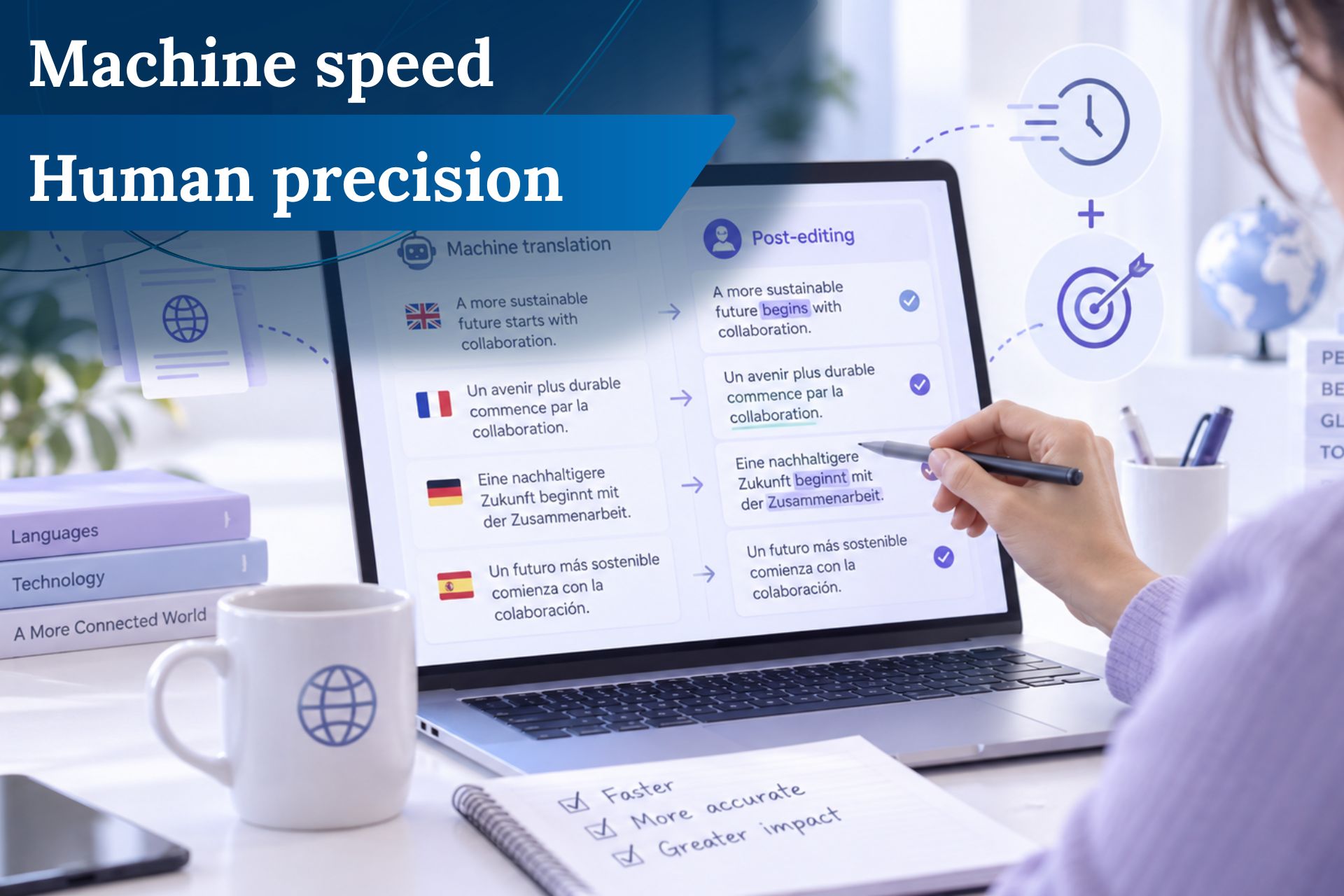
Machine translation with post-editing: combining speed and accuracy

Mother Language Day & didacta 2024 Cologne
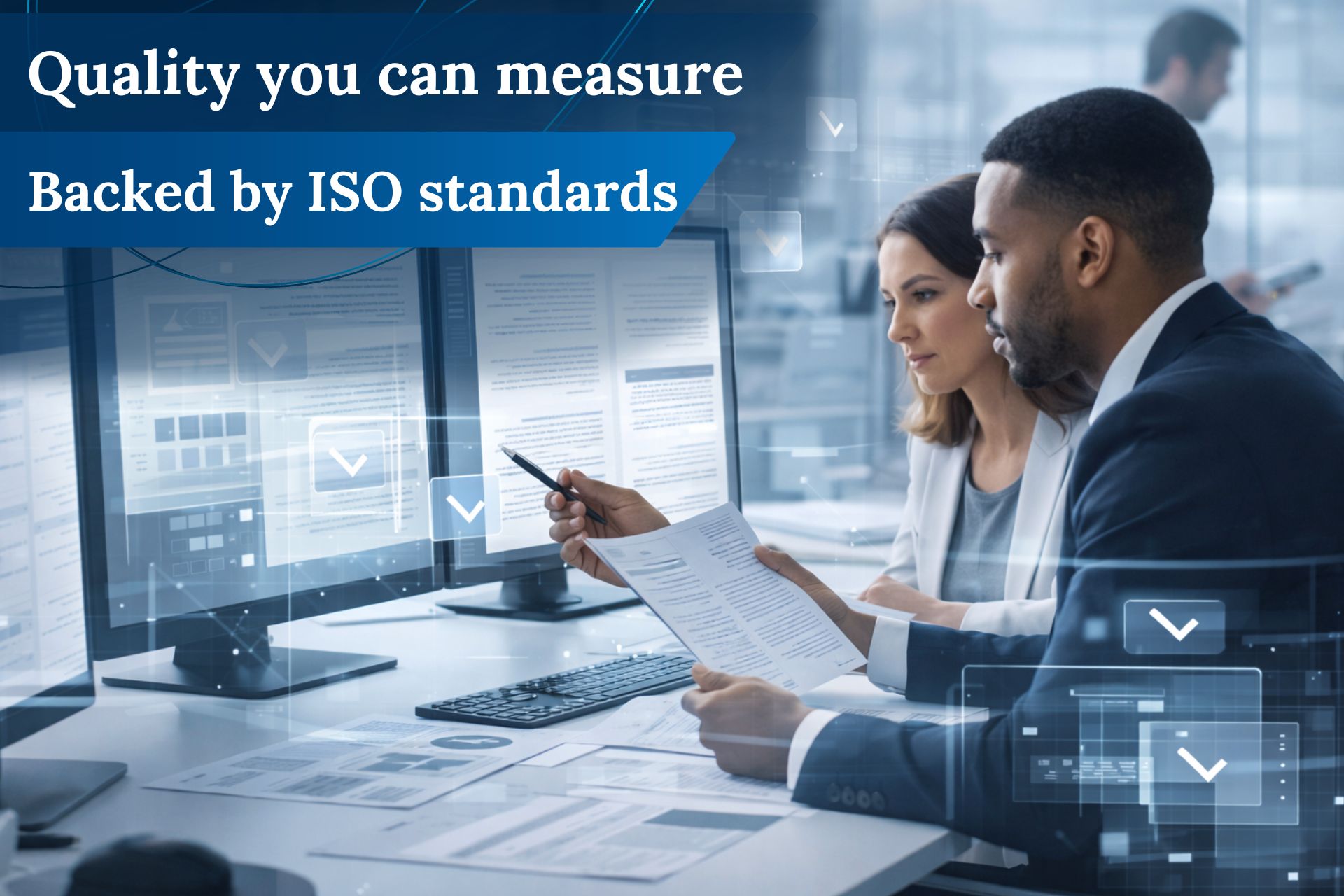
ISO-certified translations: does It really matter?
Let’s Create Something Great Together
Partner with us to craft impactful language solutions that drive your global success.
